Most guys researching hair systems still have some hair left. A receding hairline, a thinning crown, patches that need filling in. Everything we’ve covered so far assumes there’s natural hair on the sides and back to blend into.
Full cap systems are for a different situation entirely: guys who are completely bald or close to it, whether from advanced male pattern baldness, alopecia, or hair loss following chemotherapy.
If that’s you, this guide covers what a full cap system actually is, how it differs from a standard hair system, and what to expect.
Full Cap Hair System vs. Standard Hair System
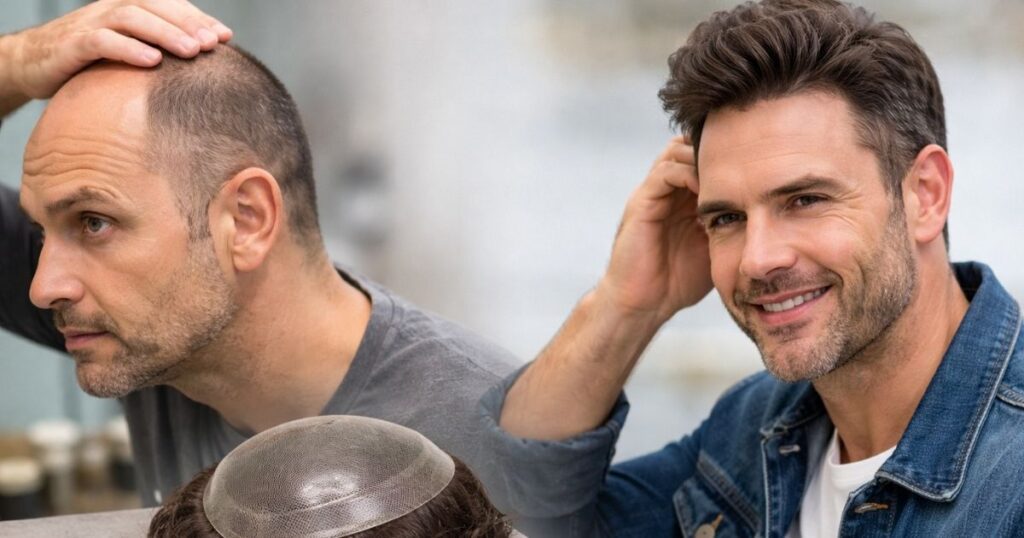
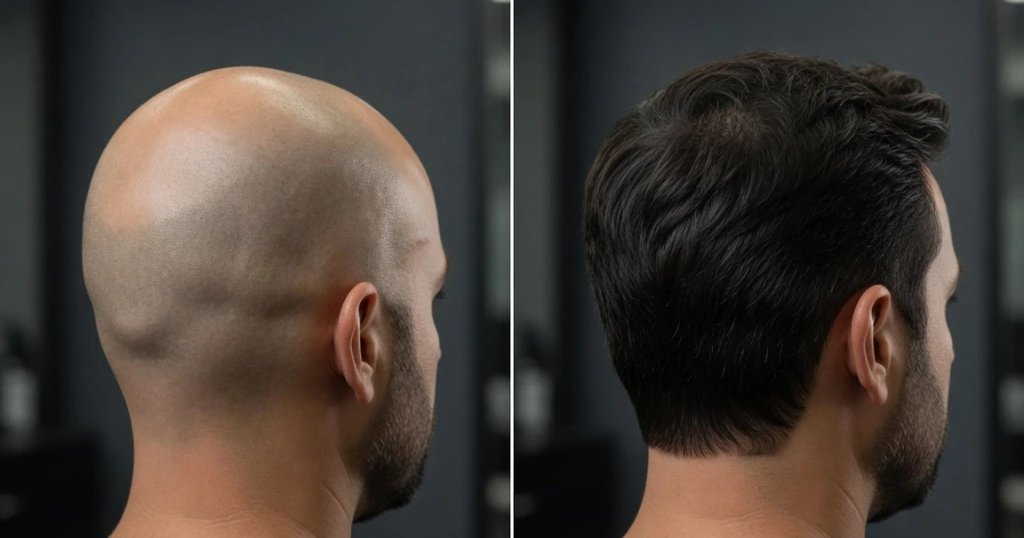
A standard hair system covers the top and front of the scalp, the areas hit hardest by pattern baldness, while blending into your existing hair at the sides and back. A full cap system covers the entire head, temples, sideburns, and down to the nape of the neck, because there’s no natural hair left to blend with. The whole head of hair you see is the system.
| Standard hair system | Full cap system | |
|---|---|---|
| Coverage | Top and front only | Entire scalp, including nape and sideburns |
| Who it’s for | Partial hair loss, natural hair remains at sides/back | Total or near-total baldness, alopecia, post-chemo |
| Fit process | Fitted to hairline pattern | Fully custom to head shape and circumference |
| Blending | Blends with remaining natural hair | No blending needed, entire look comes from the unit |
| Base options | Lace, skin, mono, hybrid | Same options, but combined more often for durability |
Why Full Cap Systems Are Always Custom
A standard hair system can sometimes work off a template because it’s only covering part of the head and blending with what’s already there. A full cap system doesn’t have that luxury. Every inch of it shows, so the fit, hairline, and density all have to be exact from the first day.
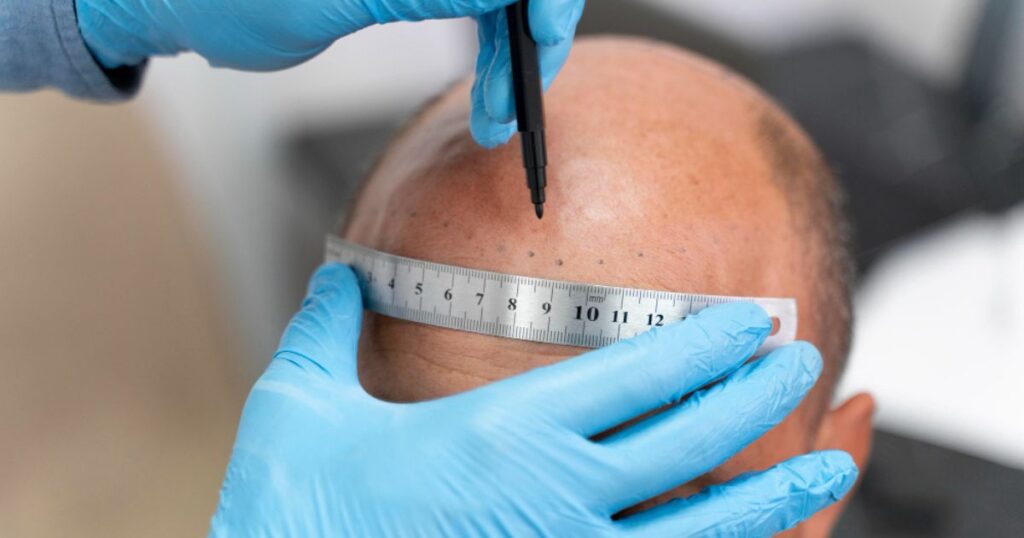
That means more measurements than a typical fitting: head circumference, front hairline to nape, ear to ear across the front, temple to temple, and the width across the crown. Get any of these even slightly off and the unit will sit wrong, no matter how good the hair itself looks.
This is the same custom process we use for our custom hair systems, just applied to the full scalp instead of a partial area.
Base Materials: What Actually Holds Up
Because a full cap has more surface area than a standard system, base choice matters even more.
Lace gives the most natural, breathable result and is a common choice for the front hairline specifically, since bleached knots there look like hair growing straight from the skin.
Thin skin (poly) is easier to clean and bonds cleanly, but on a full-head unit it can trap more heat over that much surface area compared to a smaller partial piece.
Monofilament tends to be the most durable option for full coverage, which is why a lot of full cap units use a mono base with a lace front for realism and a thin perimeter for cleanup. It’s a practical trade-off: mono holds up under the demands of covering an entire head, and the lace front keeps the hairline from looking constructed.
Most full cap wearers land on one of these hybrid combinations rather than a single material throughout, simply because no one base does everything well at that size.
Attachment: Glue and Tape, Not Clips
With a standard system, some guys have enough remaining hair to use clips as a backup attachment point. That’s usually off the table with a full cap, since there’s no natural hair to clip into. Full cap systems are attached with medical-grade adhesive or tape around the perimeter, the same approach used for standard systems, just across a larger area.
The maintenance rhythm is familiar too. Most full cap wearers are looking at a re-bond every 2 to 4 weeks, following the same logic covered in our hair system maintenance guide.
How It Compares to a Transplant
For men who are fully bald, a transplant often isn’t realistic in the first place. Transplants rely on healthy donor hair from the back and sides of the head. If there’s no donor area, there’s nothing to transplant. A full cap system sidesteps that problem entirely since it doesn’t depend on any hair you still have.
We cover the broader trade-offs in our hair system vs. hair transplant comparison, but for total baldness specifically, a system is usually the only non-surgical option on the table.
An Honest Limitation
Full cap systems cost more than standard systems, and that’s simply a function of size, not a markup. There’s more material, more hair, and a more involved custom fitting process. If you’re weighing this against a standard partial system, the price difference is real and worth planning for before your consultation, not after.
Getting Fitted for One
Because so much rides on getting the measurements right, we don’t recommend ordering a full cap system without a proper in-person fitting. A consultation is where we take those measurements, talk through base options for your lifestyle, and set expectations on timeline, since a fully custom piece takes longer to produce than a standard unit.
FAQ
Who actually needs a full cap system?
Men with total or near-total baldness, alopecia totalis, or hair loss following chemotherapy, where there’s no remaining natural hair to blend a partial system into.
Can a full cap system be worn during exercise or swimming?
Yes, once properly bonded. The bond itself works the same way as a standard system, it’s just covering more surface area.
Does it cost more than a standard hair system?
Yes. More material, more hair, and a fully custom fitting process add to the cost compared to a partial system.
Is it the same as a wig?
Not quite. A full cap hair system is bonded to the scalp and stays on continuously like a standard hair system, rather than being worn like a wig that goes on and off with an elastic band.