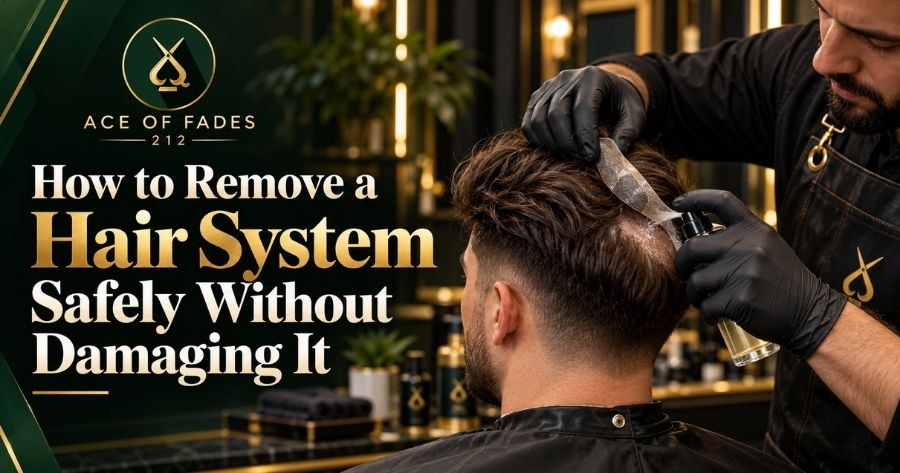
Most hair system damage does not happen while you wear it. It happens in the ten minutes it takes to pull it off. One rushed peel can stretch a thin skin base or rip hairs out of a lace front. The most common situations are torn lace and a red, sore scalp. Both are avoidable.
Overview
Soak the bond with an adhesive remover that matches your adhesive type. Then wait for the bond to soften before you lift anything. Start at the back or sides, never the front hairline.
Keep the base low and close to the scalp as you work it free in small sections. Add more remover wherever you feel resistance. After removal, clean the scalp and the base separately before your next install. This method works for lace and thin skin bases. It also works whether you wear tape or liquid glue.
Rushed Removal Can Damage a Hair System
A fresh bond grips the base harder than the knots grip the hair. When you pull before the adhesive softens, the force goes straight to the weakest point. On a lace unit, that point is the knot. On a skin unit, it is the thin film itself.
Thin skin bases often measure well under a tenth of a millimeter. Once you stretch one, it does not snap back. A stretched front edge looks wavy and refuses to lie flat, which leads to lifting issues.
Your scalp pays a price too. A strong bond can pull away the top layer of skin along with the glue. That leaves raw, tender patches that make the next bond sting.
Find out Your Bond Type
Always start with one question: what is holding the unit on? Tape and liquid adhesive release in different ways, so they need different timing.
How to Remove Hair System Tape?
Tape usually lets go faster than glue. Most double-sided tapes respond well to a solvent remover within a few minutes. Once the edge lifts, peel the tape strips off the base slowly and flat, not straight up.
Knowing how to remove hair system tape cleanly also saves your next install. Tape residue left on the base creates bumps under fresh tape. Those bumps become weak spots.
How to Remove Hair System Glue?
Liquid adhesives form a thin film that bonds tightly to both skin and base. Silicone-based adhesive stays flexible and usually needs a solvent to break it down. Acrylic adhesive, including many water-based formulas, cures harder and may need a longer soak.
If you have layered glue over several weeks, expect a slower release. Each layer needs time for the remover to reach it. Patience here is the whole secret to learning how to remove hair system glue without damage.
Pick the Best Adhesive Remover for Hair Systems
Removers fall into two broad groups. Citrus-based removers work gently and suit most tapes and silicone glues. Alcohol-based removers work faster on many acrylic and water-based adhesives.
The best adhesive remover for hair systems is the one your adhesive maker pairs with its product. Many brands sell a matching remover for this reason. Some wearers use 99 percent isopropyl alcohol on water-based glue, but it dries the skin, so follow it with a scalp cleanser.
Avoid acetone and nail polish remover. Acetone is harsh on skin and can weaken some base materials.
Impact of Base Material on the Method
The base decides how much force the unit can take. Lace forgives almost nothing, while thicker poly bases handle a bit more.
How to Remove a Lace Hair System?
Lace is a fine mesh, and each hair sits in its own tiny knot. Do you want to learn how to remove a lace hair system? Well, it comes down to one rule: let the remover do the work. Never pinch the lace edge and pull.
Slide a fingertip under the loosened edge and roll the lace back over itself. If a spot resists, stop and add more remover. A single forced pull at the hairline can open a visible gap in the knots.
How to Remove a Skin Hair System?
Poly and thin skin bases do not tear as easily as lace, but they stretch. The key to how to remove a skin hair system is support. Place two fingers on the base just behind the spot you are lifting.
That support keeps the film from bending sharply. Ultra-thin skin units need the most care, so give them extra dwell time. A monofilament base with a poly perimeter follows the same approach along its edges.
What You Need Before You Start
Gather everything first so you never leave a half-lifted unit to find a tool:
- An adhesive remover that matches your bond
- Cotton pads or a small spray bottle for the remover
- A few clips to hold your hair out of the way
- A hand mirror and a wall mirror so you can see the back
- A gentle scalp cleanser and a clean towel
- A foam head or rolled towel to hold the base while you clean it
How to Remove a Hair System at Home | Step-by-Step
Set aside at least 30 minutes the first few times. Rushing is the single biggest cause of damage.
Step 1: Clip Your Hair Back and Find the Edges
Start with dry hair unless your adhesive maker says otherwise. Clip the hair up and away from the perimeter. Use the two mirrors to locate the edge of the base all the way around.
Step 2: Apply Remover Along the Perimeter
Soak a cotton pad and press it along the edge, or spray lightly. Work the remover into the seam where the base meets the skin. Cover the full perimeter, not just one side.
Step 3: Give the Remover Time to Work
Specialists call this waiting period dwell time. Check the label, but many removers need several minutes. You will know the bond has softened when the edge lifts with a light nudge.
The adhesive often turns cloudy or gummy at this stage. If it still feels firm, add more remover and wait longer.
Step 4: Lift From the Back or Sides First
The nape and the sides hide small mistakes. The front hairline does not. Begin at the back, where the knots are usually larger, and the base can handle more.
Step 5: Keep the Base Low and Work in Sections
Fold the lifted base back over itself so it stays flat and close to the scalp. Do not pull it straight up. Move forward a little at a time, adding remover under the loose section as you go.
Step 6: Save the Front Hairline for Last
By the time you reach the front, the rest of the unit is free. That lets you give the hairline your full attention. Soak it again and roll it back with a fingertip.
Step 7: Clean Your Scalp
You should be aware of removing glue residue from scalp skin. Hold a remover-soaked pad on stubborn spots for a minute, then wipe gently. Never scrape with your fingernails. Wash with a mild cleanser afterward to lift the remover off your skin. Then let the scalp breathe.
Step 8: Clean the Base
Here is how to clean adhesive off a hair system without harming it. Lay the unit hair-side down on a towel or foam head. Apply remover to the residue and let it sit.
Roll the softened residue off with your thumb or a cotton pad, working in one direction. On lace, dab instead of scrubbing. Finish with a sulfate-free wash, and see our guide to the best shampoos and products for men’s hair systems.
Important Details to Take Note Of
- Loose hair in the glue: Your natural hair keeps growing and shedding under the base. Most people shed around 50 to 100 hairs a day, so a few weeks of wear traps a noticeable amount. Seeing it on the base after removal does not mean you pulled hair out.
- Residue shortens your next bond: Old adhesive under new adhesive creates an uneven surface. The fresh bond grips the residue instead of the base, so it fails sooner.
- Importance of the bend: A sharp fold at the lifting point creases thin skin and strains knots. A flat, rolling fold spreads the stress across a wider area.
- Impact of New York weather: Humid NYC summers push sweat into the bond edges, so units often release more easily in July. Winter steam heat in Manhattan apartments dries the scalp, so plan for extra moisture after removal in the colder months.
Common Mistakes That Damage a Hair System
- Starting at the front hairline: This puts the most force on the most delicate area.
- Skipping dwell time: Pulling a firm bond is the fastest way to tear lace.
- Scrubbing lace with a stiff brush: Hard bristles loosen knots and fray the mesh.
- Using oil and skipping the cleanse: Oil loosens some adhesives but blocks the next bond if you leave it behind.
- Reinstalling on an irritated scalp: New adhesive on raw skin can deepen the irritation.
Care for Your Scalp After Removal
Give your scalp a short break before the next install when you can. Wash it gently and check for redness in the mirror. Mild pinkness usually fades within a day.
Watch for itching or burning along the bond line. Small blisters are another warning sign. These symptoms can point to contact dermatitis, a reaction the American Academy of Dermatology describes in detail.
If a rash spreads or does not improve, see a dermatologist before you bond again. A patch test can identify the ingredient behind the reaction.
Bottom Line
Proper removal of a hair system safely protects your investment and your scalp. Slow down and match your remover to your bond. Then let time do the heavy lifting.
If you would rather hand the job to someone else, our team at Ace of Fades 212 offers hair system removal as part of regular maintenance appointments.
Clients looking for hair system removal near Midtown Manhattan can find us at 127 E 59th St in Manhattan, NY, and men who prefer to do it themselves can learn hands-on in our hair system classes.
Frequently Asked Questions
Does removing a hair system hurt?
Removing a hair system should not hurt when you use the right remover and give it enough dwell time. Pain usually means the adhesive has not softened yet. Stop, add more remover, and wait a few more minutes before you continue.
How long does it take to remove a hair system?
A careful at-home removal of a hair system usually takes 20 to 40 minutes, including scalp cleaning. Layered liquid glue can take longer than tape. Cleaning the base afterward adds more time.
Can I reuse my hair system after removing it?
Yes, a hair system is reusable after removal as long as the base has no tears or stretched areas. Clean off all adhesive residue first, then wash and dry the unit fully. Leftover residue weakens the next bond and shortens wear time.
Can I use coconut oil to remove a hair system?
Coconut oil can loosen some hair system adhesives, but it leaves an oily film on the scalp and base. That film stops fresh adhesive from bonding well. If you use oil, cleanse both surfaces thoroughly before your next install.
How often should you remove a hair system?
Most people remove and rebond a hair system every few weeks, depending on the adhesive and how much they sweat. Tape usually needs more frequent changes than liquid glue. Leaving a bond on too long makes removal harder and raises the risk of scalp irritation.