Scalp itching under a hair system is a common complaint among wearers. It interrupts the workday, and it can make a well-made system feel like the wrong choice. In many cases, the cause is specific and manageable. A hair system itch has an identifiable source, so you need to review your routine to find out the problem.
What Causes a Hair System Itch?
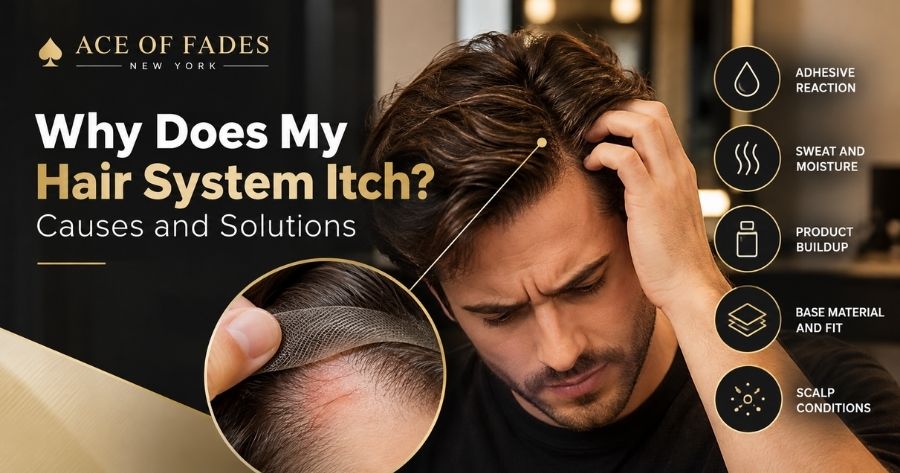
A hair system itch most often begins with the adhesive or with trapped moisture. Product buildup and existing scalp conditions can add to the problem. The skin under a base receives less airflow than an open scalp, so a minor irritation can escalate quickly.
People often ask, “Why is my hair system itchy?” Well, the answer usually sits in two details. Review how long the system has been on, and review what touches the skin underneath it.
Common Causes of a Hair System Itch
-
Adhesive or Tape Reaction
Bonding products contain chemicals that some skin does not tolerate well. A product that worked for months can begin to cause problems later. Skin sensitivity changes over time and with the seasons.
Two types of reaction exist. Hair system adhesive irritation results from ingredients that damage the skin barrier. A true hair system allergic reaction involves the immune system, and it typically causes redness and swelling. Small blisters can follow.
-
Sweat and Sebum Accumulation Under the Base
The scalp produces sebum throughout the day, and it sweats during exercise or in warm weather. Under a base, both remain in place. This mix can encourage irritation, and the itch may increase as the bonding cycle advances.
With a hair system, an itchy scalp often becomes more noticeable near the end of a bonding cycle. This is because the buildup is at its highest.
-
Buildup and Residue
Old adhesive residue and dead skin cells collect along the edge of the base. The styling product adds another layer. Without regular scalp exfoliation between applications, that layer thickens.
Thick residue holds moisture against the skin and limits airflow. The scalp can respond with itching and, at times, with flaking.
-
Base Material and Fit
A poly base generally traps more heat than lace. Lace allows more airflow, though it tends to wear out sooner. A base that fits too tightly can also rub the skin along the perimeter, and friction often registers as an itch.
An incorrect size can cause discomfort even when the rest of your routine is sound.
-
Existing Scalp Conditions
Seborrheic dermatitis and dry skin do not resolve because a person wears a system. Heat and moisture can aggravate both, so symptoms may flare under a base. Flaking and a greasy feel often point toward this cause.
If the itch existed before you started wearing a system, address the scalp condition first. No change in adhesive will correct it.
How to Tell the Difference Between Allergy or Irritation
The two reactions feel similar, yet they follow different patterns. Irritation appears within minutes or hours, and it stays near the area where the product touched the skin. An allergy can take a day or two to develop, and it may spread beyond the contact area.
Examine the pattern on your scalp. Itching only along the bonded edge points toward the adhesive. Itching across the whole scalp points toward moisture or buildup.
A patch test helps clarify the cause before you commit to a new product. Apply a small amount of the adhesive behind the ear and wait 48 hours. Do not proceed with a full application if you notice redness or burning.
The American Academy of Dermatology lists intense itching and burning among the typical signs of contact dermatitis. If your symptoms match, a substance touching your skin is a likely trigger.
What the Timing of the Itch Tells You
The moment the itch starts often helps identify the cause. Keep a simple record for one week. Note the date each symptom began and the product or activity involved.
An itch that begins within hours of a new application usually points toward the adhesive or the remover. Skin can react quickly to a product it does not tolerate.
An itch that builds gradually over two weeks more often points toward moisture and buildup. The longer the system stays on, the thicker that layer becomes.
An itch that appears mainly after workouts suggests sweat as a factor. Drying the scalp area thoroughly after training can reduce that effect.
A clear timeline also helps your stylist or dermatologist. It narrows the possible causes and speeds up the solution.
What to Do if Your Hair System Itches?
The following steps show how to stop hair system itching in a logical order. Change one factor at a time so you can identify which step made the difference.
- Clean the scalp thoroughly before each application. Use a gentle cleanser and remove all old residue.
- Review your adhesive or remover. Consider a fragrance-free product designed for sensitive skin.
- Exfoliate gently once a week. A soft scrub clears dead skin and helps the new bond sit flat.
- Wash the system on a schedule. Use a pH-balanced shampoo, rinse fully, and allow the base to dry in open air.
- Allow the skin to recover. If the scalp looks raw, remove the system for several days.
Avoid scratching through the base. Scratching can break the skin and raise the risk of infection. Press or tap the area lightly, and address the cause as soon as possible.
Daily Habits for Better Scalp
Consistent habits reduce the risk of irritation. Shower after heavy sweating so moisture does not remain under the base. Dry the area with the cool setting on a hairdryer.
Follow the replacement schedule recommended for your adhesive. Extending an application past its limit allows buildup to accumulate at the edges.
Adjust your routine with the seasons. Summer heat increases sweat and sebum, so the scalp may need more frequent cleaning. Winter air can dry the skin, so ask a dermatologist before applying any moisturizer near the bond area.
Wash your pillowcase weekly. Sebum and sweat transfer onto the fabric, and they can transfer back onto the scalp.
If you sweat heavily, ask your stylist about a breathable lace front with a thin poly perimeter. This can balance airflow with durability.
When to See a Doctor
Some itching requires medical care rather than a product change. See a dermatologist if the rash spreads or if the skin oozes. Fever or pus also calls for prompt care.
An itch that lasts more than a couple of weeks after you remove the system deserves a professional evaluation. This guide provides general information and does not replace medical advice.
Getting the Right Fit
A well-fitted base and a suitable adhesive prevent many cases of itching before they start. At Ace of Fades, we fit each system to the client’s scalp and lifestyle. We also recommend a patch test before any new bonding product.
Contact us now for an appointment!
FAQs
Is it normal for a hair system to itch at first?
A mild itch during the first few days is common, because the scalp adjusts to the base and the adhesive. It should fade quickly. If the itch grows stronger or brings redness, treat it as irritation and review your products.
Can shampoo cause a hair system itch?
Yes. Harsh or heavily scented shampoos can dry the skin and irritate it. Residue left after rinsing can also cause itching. A mild, pH-balanced formula and a thorough rinse reduce that risk.
Does an itch mean I am allergic to the adhesive?
Not necessarily. Irritation and buildup are common causes, and a true allergy is only one possibility. A patch test and a product change help clarify the source, and a doctor can confirm it with skin testing.
How long should itching last after I remove the system?
Irritation usually eases within a few days after removal and gentle cleaning. If the itch or flaking continues for more than a couple of weeks, see a dermatologist.
Can a dirty hair system make my scalp itch?
Yes. Oils and sweat accumulate in the base over time. Regular cleaning removes that layer and reduces the conditions that encourage irritation.
Will a different base material help?
It can. Lace allows more air through than poly, so it suits people who sweat often. A base that fits well matters as much as the material.